
This post will be about a struggle faced by many women across the world, more acutely in certain countries than others, who have had to fight long and hard for basic human dignity and respect. It is about how they have been not only neglected in this struggle by those capable of lending a helping hand, but at times insulted and mocked, however inadvertently. Naturally I would like to include all the oppressed women no matter which corner of the Earth they happen to occupy (or all the oppressed people no matter who they are) and tell their story, but perhaps the reader will forgive me for my narrow approach for neither the length of this post nor the time at my disposal will allow me to even scratch the surface of the pain and misery inflicted unjustly on many innocent souls. Although I will focus mainly on Iranian women and their current battle to secure freedom and equal rights for themselves, I am confident that many other women, should they ever stumble upon this post, will encounter resonating paragraphs.
Why Iran? Well, I can’t hide it, I am biased since I was born there. My first language, the first food, the first walk to school, the first friends, and the first of many things happened to me in that western part of the Middle East where the desert stretches as far as the eye can see and the forest brims with tall, resilient trees. The snow falls every year in the West and North while the South gets only a little less of the Sun in the winter. There is a wide variety of great food and thrilling costumes idiosyncratic of each region as well as local dialects and accents that give a touch of cultural richness. There are historical sites older than Jesus that not only hint at how ancient the country is but how many empires and kings rose and died that left their indelible mark in history. I would have suggested you go there, my dear reader, and visit it all and much more but I feel obligated to inform you of the dark side as well. For over forty years (and more, but it is this period of time and its clash with the 21st century society that so deeply troubles me), the Iranian women have been treated as second-class citizens in their own homeland both legally and socially.
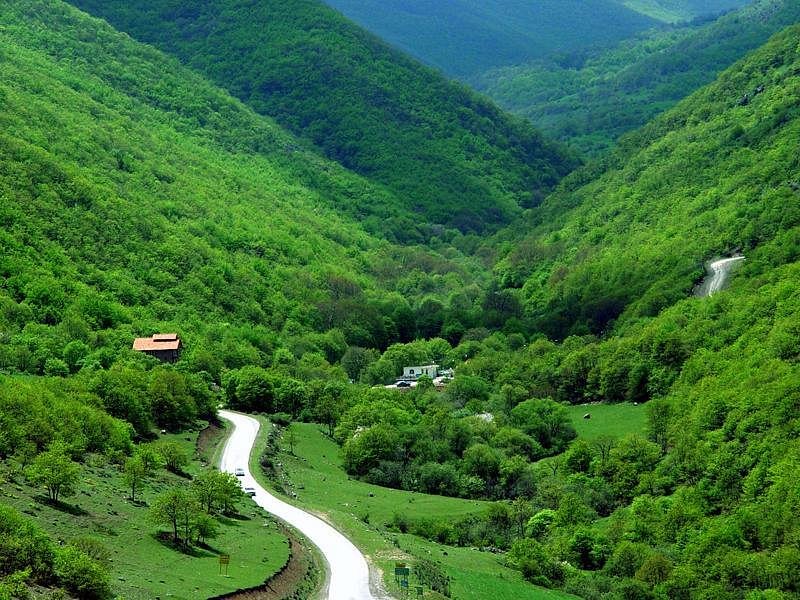
Arasbaran Protected Area in Northwestern Iran
Source: Trip Advisor
As a side note, it is this social part that aches me the most, for while I draw a sharp line between the regime in Iran and the society at large, as any sensible and knowledgeable person should, encountering certain misogynistic ideas expressed by the average Iranian Joe – or the average Ali let’s say – is more concerning than when the elements of the regime puke up the contemptible content of their heads since our regular Ali is supposed to be an ally, a friend, a brother, a father to count on against the common enemy holding the entire country hostage. But he plays right into this enemy’s hand unknowingly through his actions and beliefs. I will leave Ali alone for now and turn my attention to the enemy, the enemy known as the Islamic Republic.
Picture a society that is built on such values that have the following legal outcomes. A mother is denied the chance to go see her son play sports in stadiums because she is a woman. A woman, no matter how qualified and talented, cannot work without the consent of her husband because she is a woman. In this society, a woman cannot apply for a passport or leave the country if her husband does not grant permission because she is a woman. A woman in an abusive relationship can only get divorced if the husband agrees to it because she is a woman. (There are some limited legal avenues for a woman to initiate a divorce but the pathway is hard to track and usually proves to be fruitless) A woman, no matter how soothing and wonderful her voice is, cannot be a solo singer because she is a woman. A woman, no matter how deeply she desires, cannot dance in any public places, be it a private business or on the street because she is a woman. A woman might end up one day waking up to her husband having a second wife since the norms of this society allows for a married man to be polygamous but not the woman because she is a woman. A woman, no matter what her private thoughts and beliefs are about the dressing etiquettes, has to cover her hair and only show her face and hand in all public places. A woman, no matter how resourceful her command of the law, cannot be a judge because she is a woman. A woman, in the absence of a will, only inherits half of what her brother will inherit because she is a woman. And, if you kill a woman and you manage to get through the labyrinth of legal chaos in this society, you would only need to pay half of what you would pay for a man for compensation because, afterall, she is just a woman. (Do I really need to mention that a woman cannot be a president either because she is a woman or you managed to guess this yourself?) This is the pathetic excuse of a society that the Islamic Republic has unleashed on millions of women who have been ostracized in this regime whose foundation is built on gender apartheid.
The Islamic Republic formally consolidated its power in 1979 after the Islamic Revolution and the overthrow of the Shah (literally king) of Iran. Barbaric codes of law such as stoning and cutting off thieves’ hands were passed almost immediately after the Shia clergies took over power (though stoning was later outlawed). In an almost Stalin-like purge, thousands of political dissidents were executed in 1981 and 1982 and thousands more in the famous 1988 Executions. The recently deceased Iranian President, Ibrahim Raisi, was one of the judges in this period who signed off on many of these death sentences for which there were sham trials or no trials at all (he was known as one of the “Judges of Death”). In this atmosphere of fear and confusion post-revolution, while the nation was fighting a war with its neighboring country Iraq, there was barely any talk of modernity or any human rights, let alone women’s rights. Except that there was a talk; “A woman’s place is in the home, caring for her family. Public roles and leadership positions should be reserved for men” were the words of Khomeini, the father of the Islamic revolution in Iran. Here is some more of his wisdom regarding women: “Women should dress modestly to avoid arousing male desires. Immodest clothing leads to moral corruption and societal decay.” Another, “Western feminism is a corrupt ideology that seeks to undermine the family structure and promote immorality.” And one more: “Women are emotionally and intellectually inferior to men, and therefore, they require the guidance and protection of male guardians.” Raisi, the above-mentioned former president, had the following to say about women’s position in society: “women should be respected and protected within the framework of Islamic law. Their rights are guaranteed, but they must adhere to the principles of modesty and obedience.” And if you are still confused about where these people stand with respect to women’s rights, here is another one by the former Speaker of Iran’s Parliament, Ali Larijani: “Western notions of feminism are incompatible with Islamic values. True empowerment for women comes from fulfilling their religious obligations and embracing their roles as nurturers and caregivers.” And finally the words of the current Supreme Leader of Iran, Khamenei: “Women should not seek equality with men, as they have distinct roles and responsibilities ordained by Allah.” Enough of this sugar-coated vomit of rotten bullshit. Let’s see what the Western allies of oppressed women have to say about this.
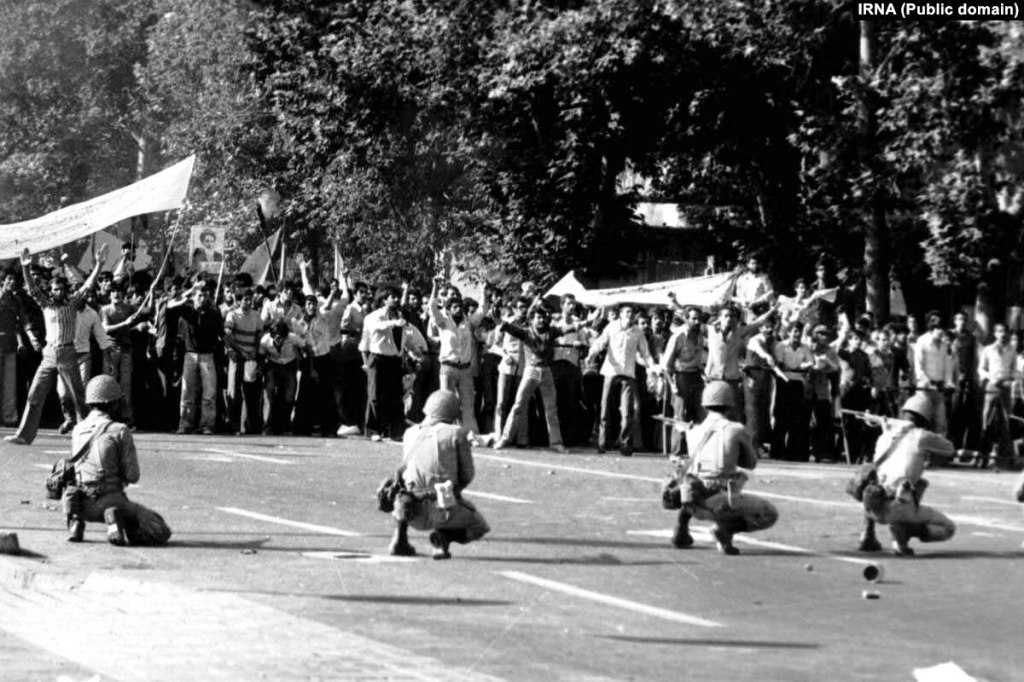
Protesters in Iran during the 1979 Revolution
Source: Radio Free Europe Radio Liberty
In 2022, Mahsa Amini, a 22-year-old Iranian woman was arrested for wearing her hijab (Islamic dress code for women) “inappropriately.” She later died in police custody. Following the news of her death, Iranians took to the streets and within days mass protests were taking place across the nation with many demanding not only an end to the compulsory hijab, but also other social freedoms as well as economic opportunities. A crackdown immediately began by the regime and carried out by its headless goons dressed in police uniforms or at times in civilian clothing so as to confuse protesters. The internet was shut down, hundreds of people were killed, and thousands were arrested during the next few months of ongoing protests. It was, in my opinion, the largest feminist movement in Iran since 1979, though far from the only one. An uncountable number of brave Iranian women have been beaten on the streets, arrested, fined, attacked, and killed fighting against that very hijab. The campaign against compulsory hijab has gained a large momentum among Iranian women, especially the youth, and they manifest this form of civil disobedience by removing their veil, showing their hair, and wearing clothes that the government would surely disapprove of.

A Woman Burning Her Hijab in 2022 Protest
Source: BBC
And what did the West, the bastion of human rights and freedom do? While the Iranian population were being massacred on their own streets, Ibrahim Raisi, then Iranian president, gave a speech at the United Nations and “educated” the civilized world about human rights. You could not have made it more ironic if you wanted to. And what do the self-described feminist Western journalists and politicians decide to do to support their sisters in Iran? They too wear the hijab proudly while interviewing Iranian leaders such as Raisi so as to “respect” the culture, like Lesley Stahl who decides to use the opportunity to ask this murderer if he listens to Western music. As did Catherine Ashton, the former EU foreign policy chief, while being utterly ignorant of the fact that her decision to cover her hair is weaponized by the Morality Police agents in Iran who on the streets of Tehran tell an unveiled girl that whether she believes in hijab or not she must obey the law because even foreign leaders and journalists do the same. Codepink, a feminist organization constantly active in the United States has multiple sections on its website covering different topics including international issues. They also have one for Iran. Is there a single mention of the campaign against compulsory hijab or the 2022 nationwide protests? Is there a single word of solidarity with the prosecuted and persecuted (yet relentless) women of Iran? Not even a passing reference to any of these. Nor is Codepink the only feminist organization that stayed silent while women were being arrested on the streets of Iran for demanding the most basic human rights. When Roe v. Wade was overturned, the United Nations called it a “huge blow to women’s human rights.” And yet, just recently, the very same organization decided to have a moment of silence for Ibrahim Raisi, this international misogynist and criminal, after he died in a helicopter crash in northwestern Iran.
The mainstream band of modern Western Feminism asserts that it is not for the Western women to determine what is empowering or what is oppressive for women in other cultures. This in turn leads them to absurd conclusions such as that hijab is in fact a symbol of “empowerment” and “freedom.” Consequently, they clear their agenda of any reference to women’s rights in many other countries except to validate the oppression that those women go through. This mode of thinking is not only unethical and untenable, but is frequently violated by the very same proponents of it. Afterall, would a feminist from New York simply ignore and brush aside a misogynistic law in Alabama? Would French feminists stay silent if their German sisters come under attack miles away? The answer is an obvious no because in recent years we have seen a surge of feminist organizations who have campaigned for women’s rights in places far from where they live. The fact that New York is a Northern state with a different history and culture than Alabama appears to pose no hurdles in the path of our New Yorker feminist. Nor the fact that Germany and France have distinct cultures troubles any French or German feminist in fighting each other’s fight. The new ideology that has taken root in many Western feminist circles seems to care about women only when they look like them and put up a tall wall to block out any noise coming from truly disadvantaged women so that it looks as “progressive” as possible. There are countless numbers of women from Muslim nations residing in Western countries who do not want to wear the hijab and be “modest” and do not do so at the risk of being chastised by their own family. Many of them have to pretend to be pious around their community and only live as they wish when alone, and even then in constant fear that a familiar set of eyes might catch a glimpse of their “shameless” behavior and dressing. When these very same women attempt to break their silence (which takes an enormous amount of courage), their voices are dampened by the louder and more amplified voices of those within these communities who wish to keep women “in their place” and who create an unbreakable shield against any outside criticism by claiming “racism,” “bigotry,” and “Islamophobia.” What a convenient arrangement! Not only women suffering from the inside are under enormous pressure not to speak up and those who dare do so are labeled, threatened, and ostracized, but any potential help that could come from the outside for these women is blocked too. How progressive!
This sense of abandonment by Western feminists, who would turn the world upside down if the slightest sight of misogyny crept into the politics of their own nation yet so peacefully accept and even affirm the absolute misery of a fate of their sisters in other nations in the name of “cultural respect” is heartbreaking. What a shame and travesty? What an insult to us? To be branded essentially as pre-civilized who have a “culture” of subjugating women turns my stomach. To announce that this culture, wherever it might be, must also be “respected” is truly beyond infuriating. (For even if such a culture that subjugated women with the majority opinion did exist, would it deserve an iota of respect in the mind of a modern human with even an average sense of morality?)
Well, whoever possesses this culture, it is as clear as daylight that it is not the Iranian women, nor is it the many Iranian men who stand proudly by the side of the women of their nation. If you still believe that perhaps such discrimination against women in Iran is the wish of many Iranians including women, then I suggest you do one simple search online. Look for pictures of Iran before the Islamic Revolution (1979) and see for yourself. Is it possible that such people had a complete change of culture in one year? Before the 1979 Revolution, the Iranian woman could attend stadiums, could wear her desired clothing, had a right to divorce, could be a singer and a dancer, could be a judge, and had her husband wished for a second wife, she would have to consent to that wish. (Stats are difficult to come by with regards to polygamy both pre- and post-revolution. In general, polygamy is frowned upon and rarely practiced in today’s Iran). She also did not need her spouse’s consent to work outside of home and had a right to abortion in certain cases. Make no mistake! I am not defending the Shah and his regime. There was more than enough political repression engulfing the country at the time and the lives of many were far from satisfactory. But it is a truth that many women in Iran enjoyed much higher levels of freedom and autonomy and were gaining more equality by the day until the misfortune of Islamic Republic wreaked havoc on them. All of this should suggest that the current laws and practices in Iran with respect to women do not resemble anything like the Iranian culture.
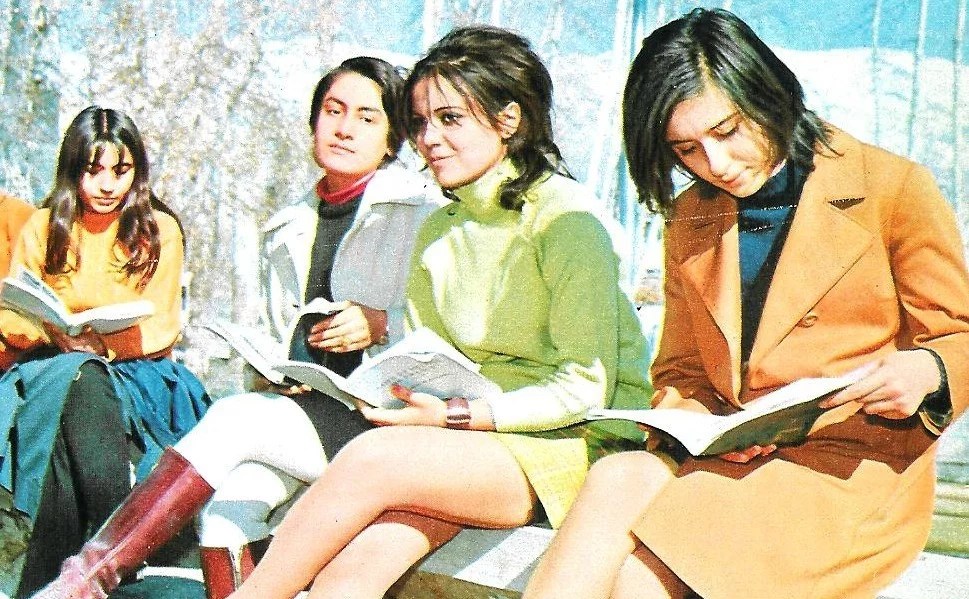
University of Tehran 1971
Source: NPR
What I ask of you, my reader, is to pay more attention next time a group of women put their lives on the line fighting injustice and cruelty against them in other countries. It is not the wish of the oppressed to remain oppressed. It is the wish of the oppressor to have you convinced that the oppressed is entirely satisfied with her situation and, in fact, grateful for it. If you truly care about the well-being of humans on this planet, if the thought of discrimination appalls you, if the voice of the unheard troubles you too, do not stay on the side that claims “cultural respect” when the culture in question is nothing but a continuous subjugation of a gender whose only sin is having the wrong genitalia. Trust me, those with whom you dream of making an ally with simply because they are “the other culture” do not and will never consider you an ally because their views and values are fundamentally different than yours. Instead, be bold; Stand with those who share your values. While I may understand that you have grievances against the U.S. government, the enemy of your “enemy” is by no means and no measures even remotely your friend. Iran’s government is not a representative of the Iranian people and should not be mistaken for one.
This post has no citations. Since the information presented here can easily be verified online, I did not deem it necessary to cite sources. It is also not, unlike the other posts, a policy proposal. It was an opinion piece on the plight of the Iranian women, shared by many women in other nations as well, and I consider the successful resolution of this plight to be vital to the advancement of any society and the entire globe. “Arguing” for women’s rights was not the intention of writing this piece. Though such arguments can easily be made and defended, the necessity of women’s rights is so evident and thoroughly discussed throughout history by more capable and eloquent people than me that to simply reiterate their arguments would be nothing but cliché. I, therefore, had two objectives in writing this blog post. First, I wanted to familiarize you with an important and old movement, namely the women’s rights movement, in Iran. Second, I hoped to add a voice, however small, to this movement. I wish for all the women in my life to enjoy freedom and equal opportunity, to be able to sing, dance, work, fall in love freely, express themselves, follow their talents and dreams without threats and legal limitations, and be who they wish to be, a woman.
 Drunk On Reason
Leave a comment